
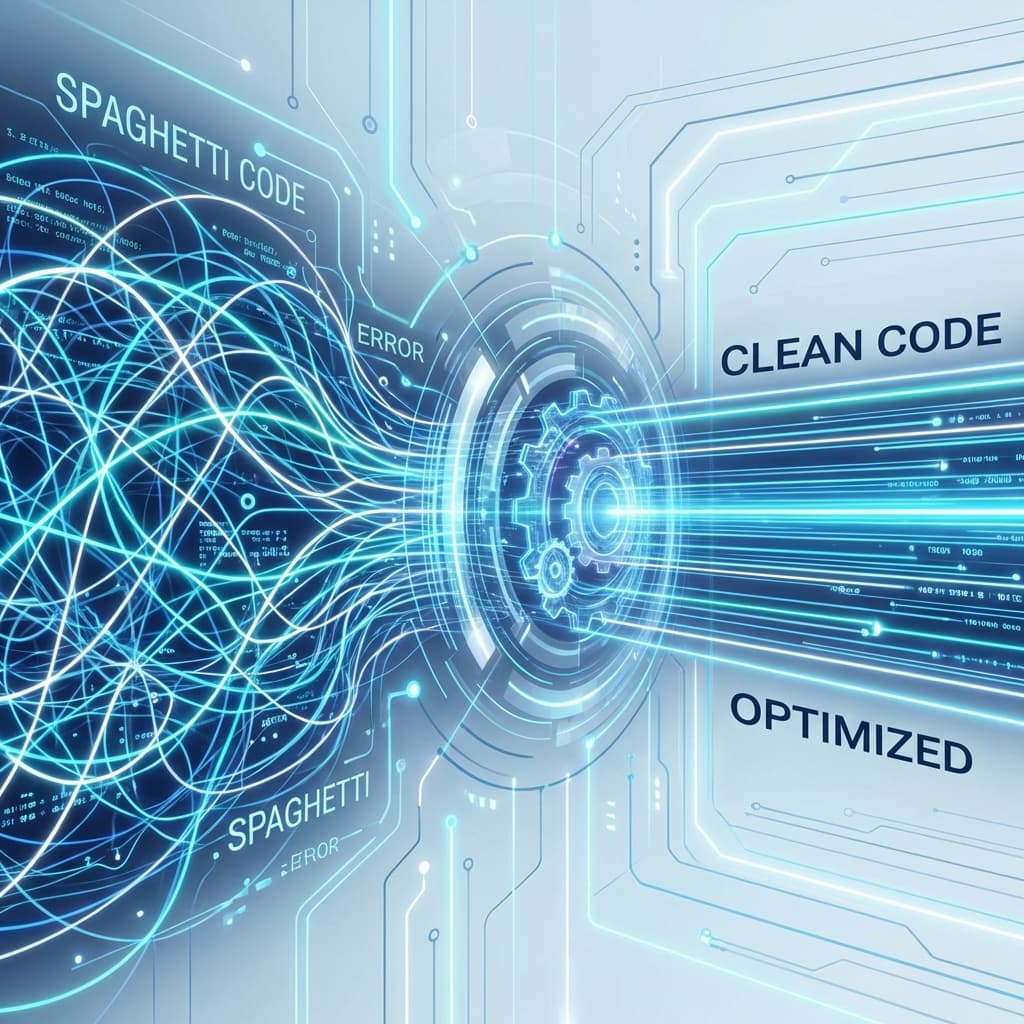
The era of generative AI has made code creation easier, but it has also brought new challenges: code proliferation, redundancy, and "just working" solutions. In 2026, the key skill is no longer just generating code, but reducing its cognitive cost. This is precisely the mission of the code-simplifier plugin for Claude Code.
Beyond the Classic Linter
Unlike a traditional linter that strictly applies syntactic rules, code-simplifier acts as an intent-aware semantic linter. It analyzes code not character by character, but logic by logic.
Its goal is to transform a "tired PR"—full of nested conditions, poorly named variables, and duplications—into readable and maintainable code, without ever altering the functional behavior.
Optimal Workflow
To get the most out of this agent without risking regression, I recommend a three-step workflow:
1. The "Cool Down" Phase
The best time to use it is at the end of an intense development session. Once your feature works (and tests pass), run the agent.
/plugin run code-simplifier
Prompt: "Clean up modules modified during this session.
Focus: reducing nesting and naming clarity."
This is the perfect moment to pay off immediate technical debt, even before it gets committed.
2. Pre-Review Cleanup
Before opening your Pull Request, use the agent for a finishing pass. This allows your colleagues to focus on architecture and business logic during the review, rather than being distracted by syntactic noise or unnecessarily complex structures.
3. Targeted Refactoring
On existing codebases, code-simplifier excels at modernizing legacy blocks.
Prompt: "Simplify the `processUserData` function using
modern TypeScript features (nullish coalescing, optional chaining).
Keep logic strictly identical."
What It Replaces (and What It Doesn't)
It is crucial to understand where this tool fits:
- It REPLACES the tedious "mental cleanup" you do before committing.
- It DOES NOT REPLACE unit tests or architectural decisions.
Think of it as an ultra-rigorous intern who cleans up the workshop after you. They won't build the furniture for you, but they'll make sure no tools are left on the floor.
Conclusion
Using code-simplifier systematically is not about laziness; it's about code hygiene. By delegating syntactic simplification to AI, you free your brain for higher value-added tasks.
Try the RouterLab API
Move from the article to a real request: start a trial, get a key, and call models through an OpenAI-compatible API.